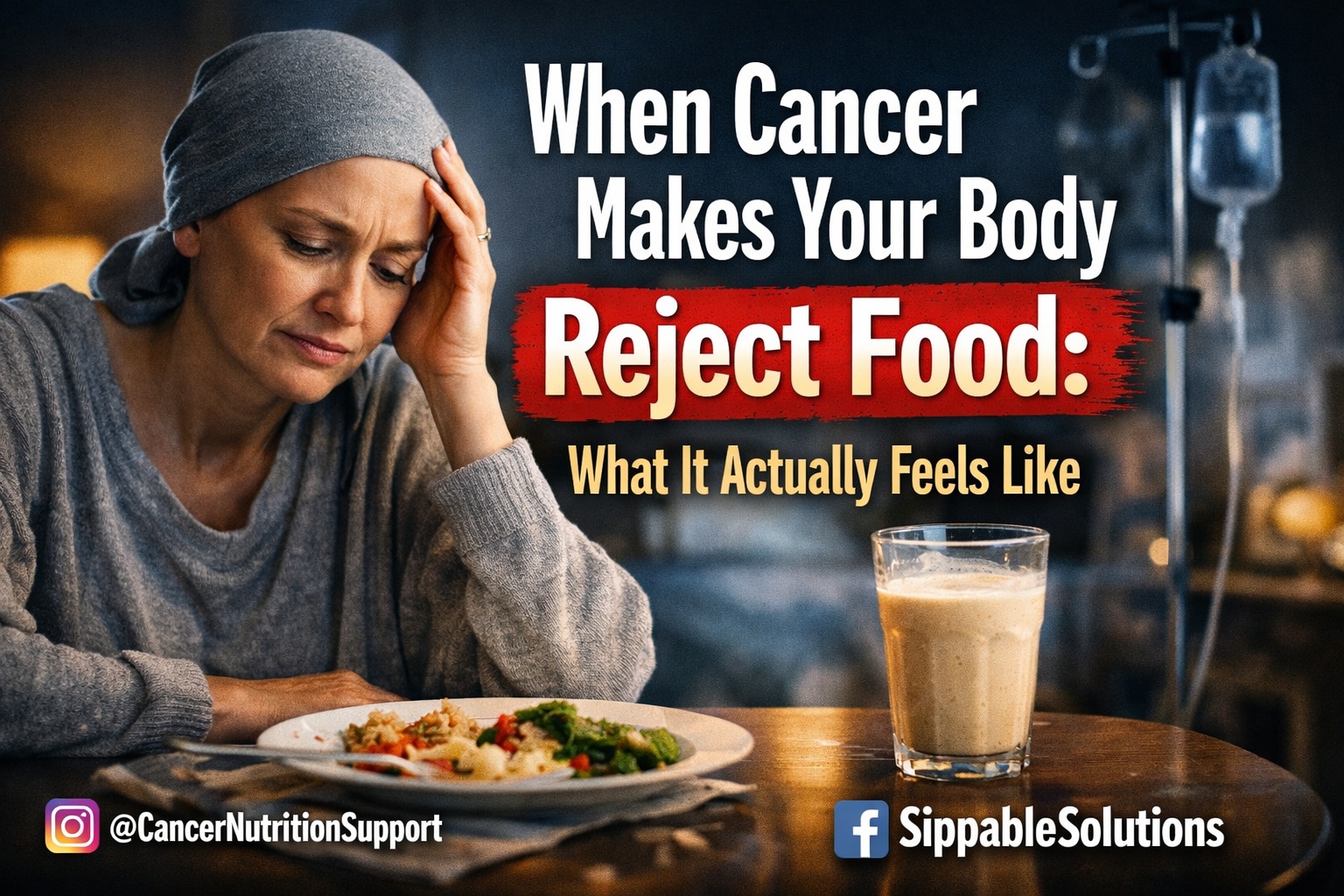
When Cancer Makes Your Body Reject Food: What It Actually Feels Like
Category: Appetite Loss Solutions

When people talk about cancer and weight loss, they always focus on the numbers, the pounds, the calories, the charts, the graphs … things you can measure, but nobody talks about the grief.
The invisible grief that hits you when you lose your appetite, and it IS grief.
It’s a loss, the loss of something you never thought you could lose: the desire to eat, the desire to taste.
We miss being able to enjoy something as basic and simple as ‘eating food’, like we used to do.

It’s hard to explain to someone who hasn’t lived it, how it changes everything.
We sit stressing in front of a plate of food we used to love, it meant comfort or culture and made us feel good, but now it’s everything but.
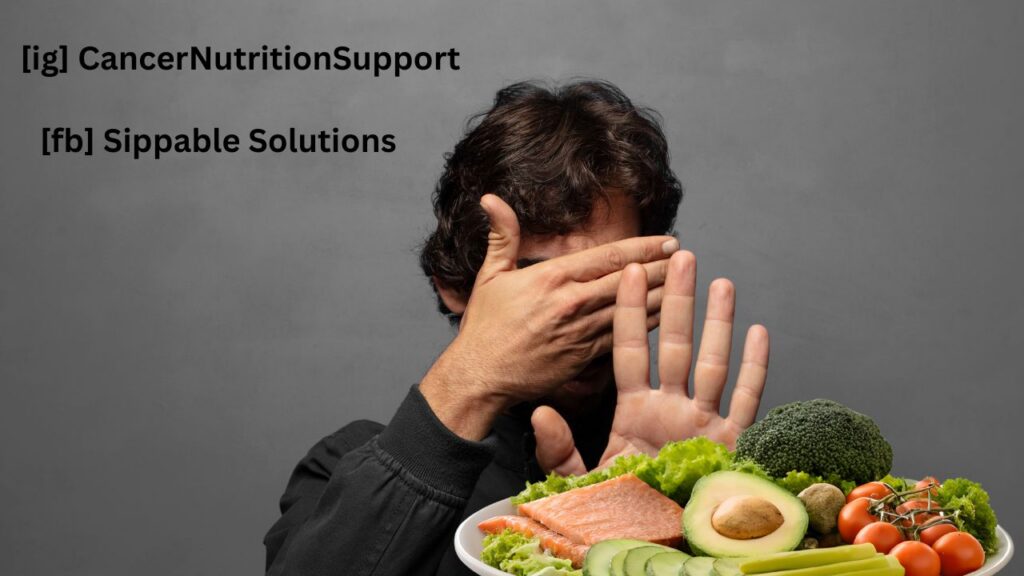
We look at it and feel nothing, or we feel dread, possibly nausea, and there’s this heavy, sinking feeling that we’re about to disappoint everyone in the room by not eating enough or at all.
It’s like we’re losing a part of our identity, our joy, our connection to the world.
We’ve lost a main component of enjoying the human experience – and the people around us don’t know what to do with that.

They say, “Just try to eat something – anything,” as if appetite is a switch you can flip on or off.
Willpower can’t override nausea, early fullness, taste changes, or the way your body suddenly treats food like it’s the enemy.
They say it with love, but it lands like a bomb, and when you can’t eat, everyone who is noticing this – panics.
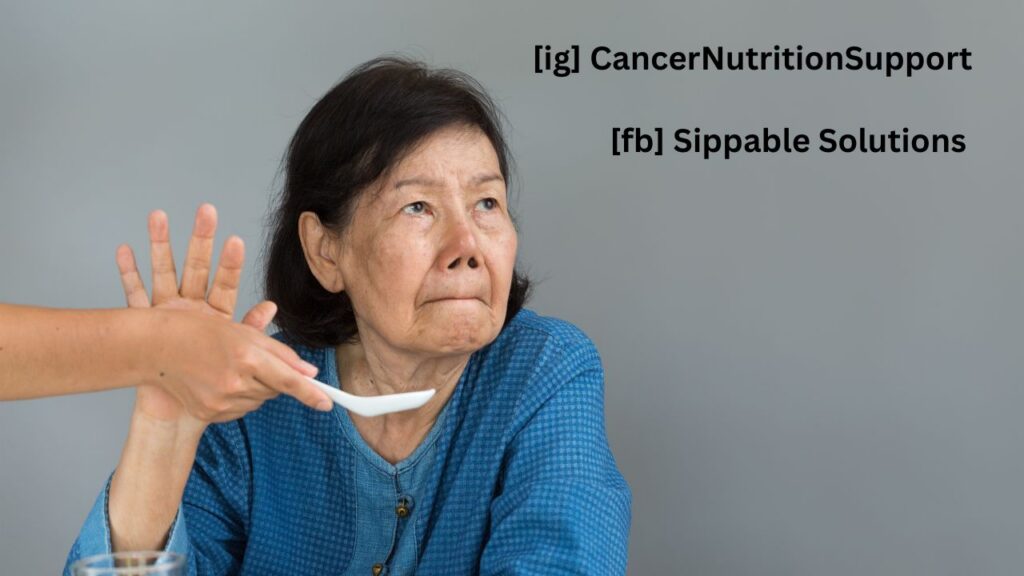
Caregivers try or push harder and you end up feeling guilty while they feel helpless.
Meals turn into battlegrounds and you start to dread them, not because of the food or who’s serving it, but because of the emotions sitting at the table with you when you can’t eat what they’ve prepared with love…
… but the truth is simple: you’re not intentionally refusing food, it’s your body that’s refusing the food whether you like it or not, and that difference matters more than people realize.
When you’re in that place where every bite feels impossible, you start searching for anything your body will tolerate.
You’re not asking for a miracle or a cure, just something that doesn’t make you feel worse.
Something that doesn’t trigger nausea or pain or that awful wave of fullness that hits after two bites.
You’re not looking for perfection, you’re looking for survival – anything that works WITH you instead of against you.
For me, that “something” wasn’t a plate of food, or soup, or toast or crackers or any of the things people kept offering with love and hope in their eyes.
Believe me, like many of us I wanted to want them, to be able to eat them, but wanting and being able are NOT the same thing.
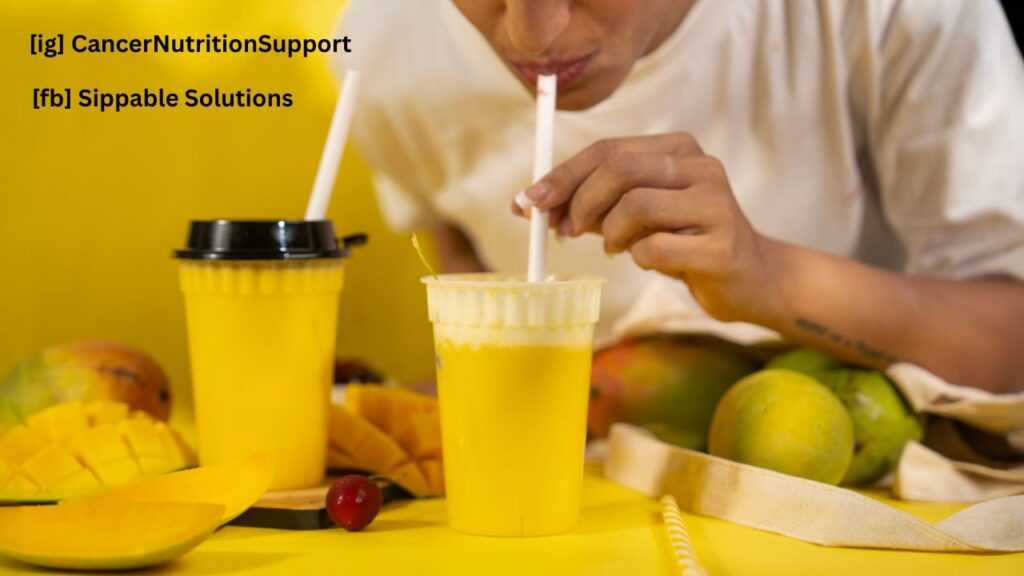
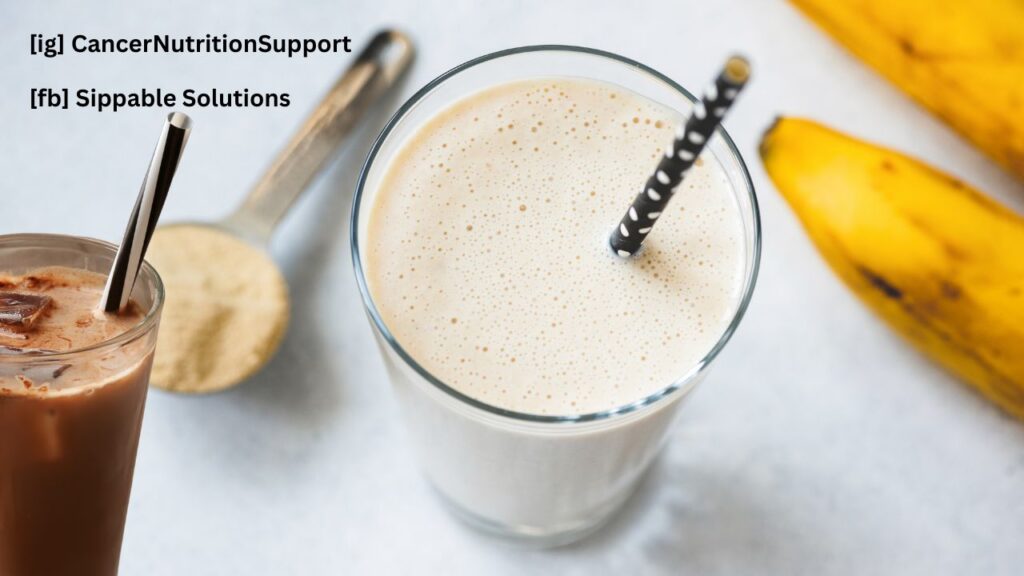
What finally worked for me was a liquid meal replacement that I only needed to sip down 2 servings a day of, at any pace I wanted to.
Not the cheap, sugary, inflammatory ones that get pushed in clinical settings, or the ones that taste like chalky chemicals and leave you feeling worse than when you started.
This was a clean, nutrient‑dense liquid meal that didn’t fight my body, didn’t overwhelm me, make me feel sick or trigger that awful “I’m done” feeling after two sips.
It was the first form of food that my body didn’t reject in a long time, just an ounce or two an hour, and over time I got to craving 3 servings a day.
That’s when I knew I was ready to carefully begin re-introducing real food again, like you would feeding a baby new foods.
I’m not going to stand here and pretend it cured anything, and I can’t say that it magically reversed anything, that’s be over the top.
What I can tell you is that it gave me something I hadn’t had in a long time: a way to nourish myself without suffering the consequences for it.
It was the only way I had for getting a fully balanced meal into my body when everything else I tried made my symptoms worse.
What I learned over the next few weeks is that when you finally get some nutrition – real nutrition – into your body, your body responds.

It wasn’t a miraculous overnight transformation, it was small, meaningful shifts that added up quickly.
A little more energy,
A little more strength,
A little more stability,
A little more “I can do today.”
Those tiny shifts matter, they all add up and they give you a sense of control in a situation that feels like it’s taking everything from you, and that’s the part people don’t understand.
Sometimes the win isn’t “getting better,” sometimes it’s as simple as finding something your body doesn’t reject, or finding a way to nourish yourself when the world keeps telling you to “just eat” – but you can’t, it’s not that simple.
I’m not here to make medical claims or pretend that nutrition can override biology, but I AM here to tell my truth.
When I couldn’t tolerate food, when everything made me sick, when I felt and looked like I was disappearing, this liquid meal replacement was the only thing my body said ‘yes’ to.
That ‘yes’ mattered more than anyone on the outside could ever understand.
No it didn’t cure me of cancer, of course not, but it did nourish me when nothing else could, and sometimes, that’s enough to change everything.

If you’re struggling to eat and nothing is working, drop HELP and I’ll send you a guide of what worked for many of us when nothing else would.
Follow me and be sure to watch for my reply so I can make sure that gets to you.
Do me one favor before you go? If you’ve ever struggled with eating during cancer, or supported someone going through that, what was the hardest part?
Please share it in the comments so others can learn from your experience, and – what helped that you’d want others to know?
Thanks everyone, make it a great day, until next time!
Facebook Comments