Cancer Patients: You’re Eating, But Still Disappearing. Here’s Why.
Category: Cancer & Emotional Wellness
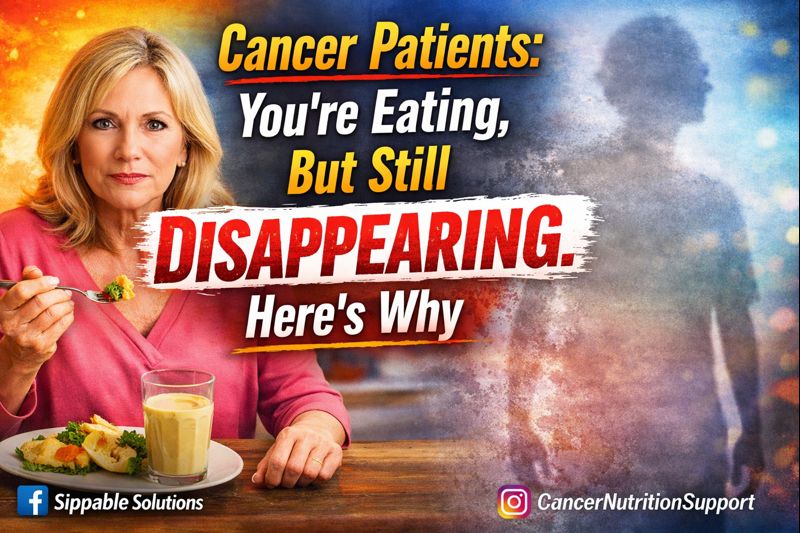
Why “Eating Enough” Still Isn’t Enough in Cancer
One of the most common things cancer patients say is, “But I am eating.”
They say it with confusion, frustration, and often fear because despite eating, their weight keeps dropping, their strength keeps fading, and their body feels like it is disappearing anyway.
Caregivers say it too. “They’re eating. I don’t understand why this is happening.”
Doctors generally assume that if someone is eating, nutrition is being handled, but in cancer, eating and nourishing are not always the same thing.

Cancer and its treatments change the way the body processes food. Chronic inflammation alters digestion, absorption and metabolism at a fundamental level.
Food that looks sufficient on a plate may never become usable nutrition at the cellular level. Calories can be consumed without being effectively absorbed or utilized.
This is one of the reasons people can eat regularly and still lose weight, strength, and muscle. Cancer cachexia is not simple starvation, it’s a metabolic condition driven by inflammatory signals that tell the body to break down muscle and fat even when food is present.
Protein intake alone does not stop this process, (there’s several contributing factors to this that I’ll get into next time), and neither does willpower.
In cachexia, the body becomes resistant to the normal signals that tell it to build and maintain muscle. Instead, muscle breakdown accelerates, and the body pulls energy from its own tissues.

Appetite loss is often one of the earliest warning signs that’s not a choice, it’s not giving up, and it’s not depression or a lack of effort.
It’s a biological response to inflammation, treatment side effects, and altered gut function.
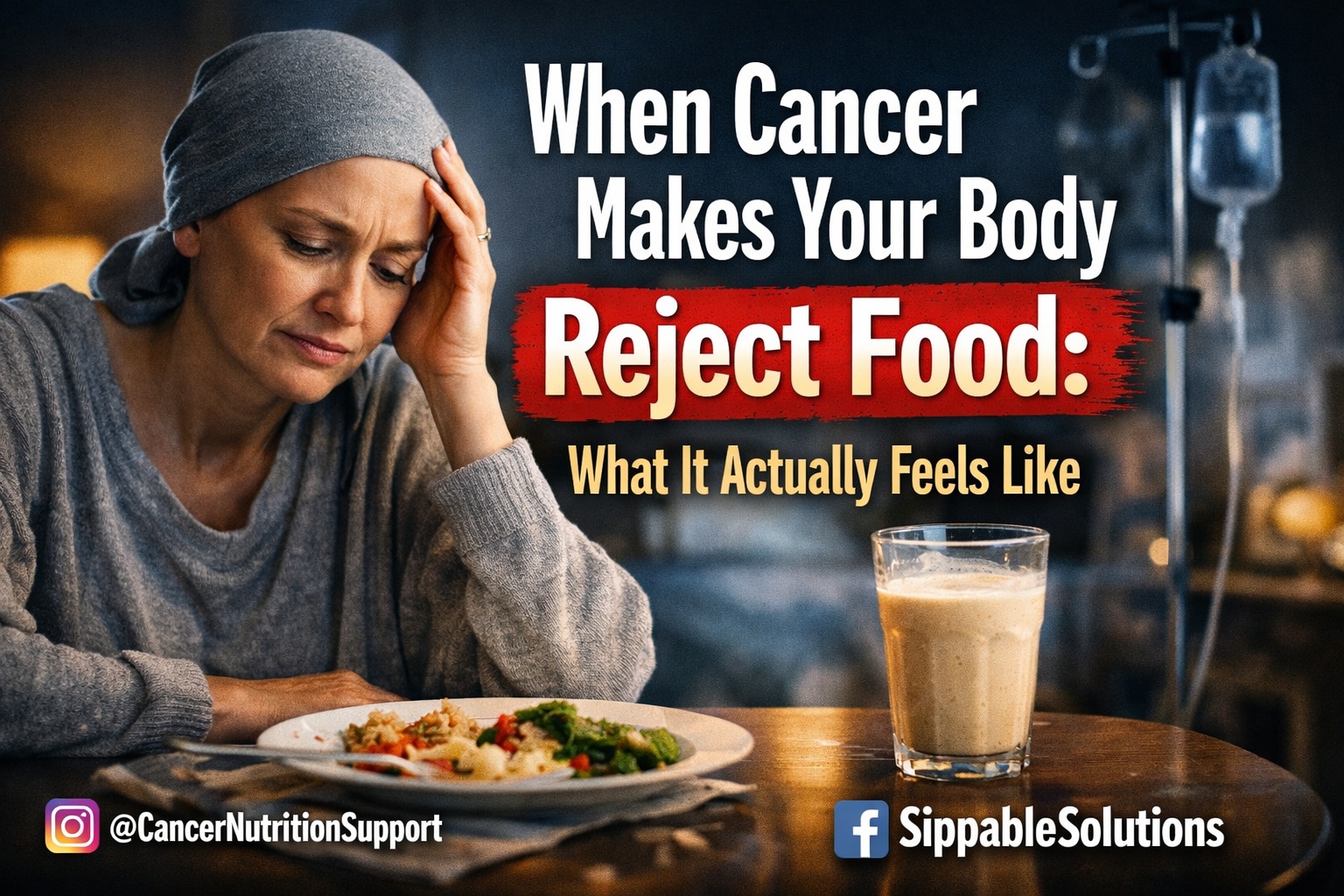
Taste changes, early fullness, nausea, and food aversion are not random inconveniences, they’re all signals that the body is struggling to tolerate food in its usual form.
When people are told to “just eat more,” the advice often backfires. Forcing food can increase nausea, intensify fullness, and create anxiety around meals.

This is where guilt sets in. Patients feel like they are failing, caregivers feel helpless and push harder, meals turn into emotional battlegrounds instead of moments of nourishment.
The focus stays on the plate instead of on what the body can actually handle.
Understanding this changes the conversation. It shifts the problem away from effort and toward physiology.
The question stops being “Why aren’t you eating?” and becomes “What can your body tolerate right now?”
For many people facing cachexia, progress doesn’t begin with larger meals, it begins with:
– Gentler nutrition.
– Lower volume.
– Slower intake.
– Less pressure.
– Nutrition that doesn’t overwhelm the gut or trigger immediate rejection.
Sometimes that means liquids instead of solids. Sometimes it means sipping small amounts over time instead of sitting down to a full plate. Sometimes – it means letting go of the idea of normal meals altogether, at least for a while.
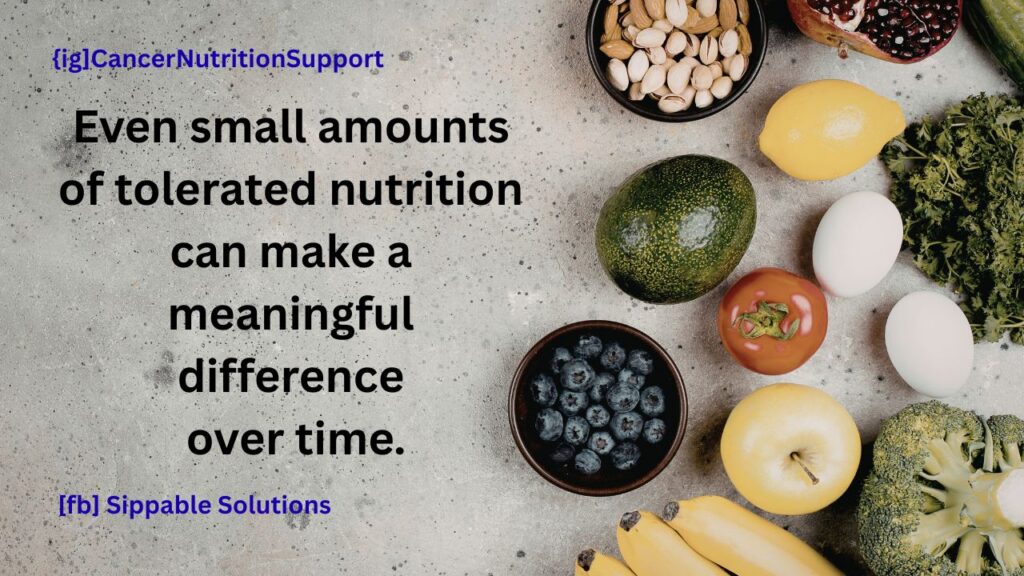
This isn’t about curing cancer or reversing cachexia completely (although it has happened); it’s about slowing decline, preserving function, and supporting the body when traditional eating no longer works. Even small amounts of tolerated nutrition can make a meaningful difference over time.
When the body finally receives nutrition it can accept, changes often happen gradually.
– A bit more energy.
– A bit more stability.
– A little less weakness.
These shifts may seem small, but they matter. They give back a sense of control in a situation that often feels like it’s taking everything away.
If you are eating and still losing weight, this is NOT your fault. If food feels impossible, it’s not because you’re being difficult or uncooperative, your body is responding to cancer in a way that is real, physiological, and widely misunderstood.
Recognizing that truth isn’t giving up, if anything it’s the first step toward finding an approach that works with your body instead of against it.
If this sounds like what you’re living, you don’t have to figure it out alone.

I put together a simple guide that walks through what helped when eating “enough” wasn’t working, and for when food felt completely impossible but the body still needed nourishment.
It’s based on lived experience with a dash of theory, and it focuses on approaches that work with the body instead of against it.
If you want it, comment HELP or use the link in my bio and I’ll make sure you get it. Sometimes the most important step isn’t eating more, it’s finally understanding what your body is asking for.
#cancercachexia #LossOfAppetiteCancer #cancernutritionSupport #whenCancerPatientsCantEat #cancerWeightLoss
Facebook Comments