Movement Isn’t Optional During Cancer: It’s Survival. Here’s How to Make it Doable.
Category: Brain
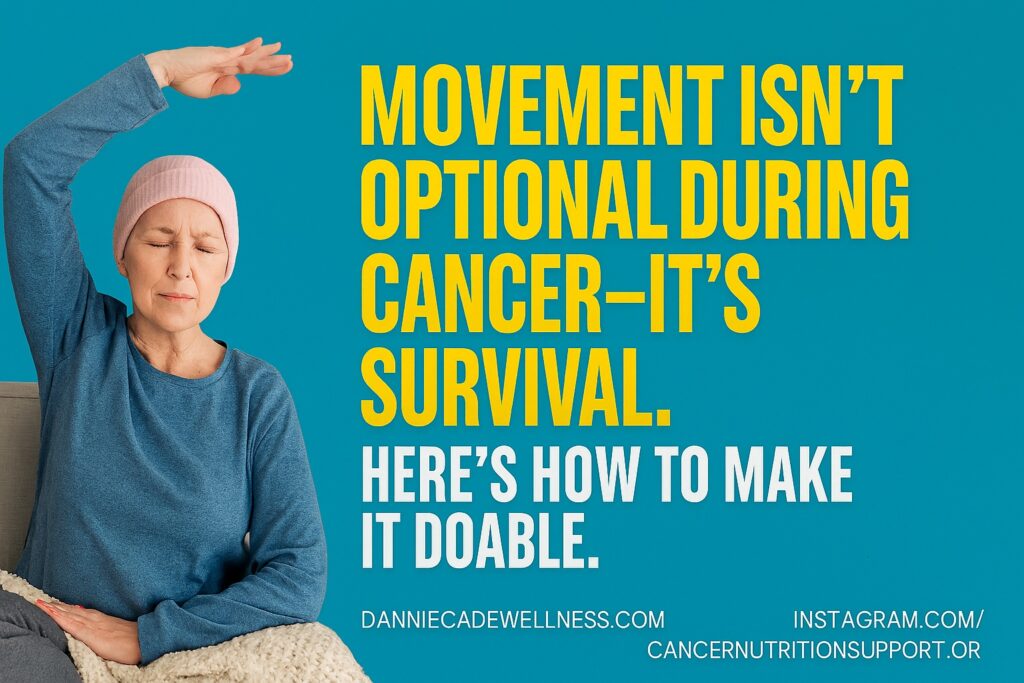
Movement for Healing
When you hear the word “exercise” during cancer treatment, it can feel like an impossible expectation. Fatigue, pain, nausea, and stress make even the simplest tasks challenging. Yet, movement is not a luxury; it is a critical component of recovery. The body was designed to move, and even gentle, consistent activity can improve circulation, maintain muscle mass, reduce fatigue, and support mental well-being. The key is reframing movement, not as a performance metric or workout challenge, but as a tool for healing.
The first step is understanding why movement matters during cancer treatment. Treatments like chemotherapy and radiation, while targeting the tumor, also affect healthy tissue. They can reduce muscle mass, weaken bones, and contribute to fatigue. Lack of activity compounds these effects, leading to deconditioning, reduced mobility, and greater risk of complications.

Gentle, consistent movement helps counteract these side effects and improves circulation and lymphatic flow, which are essential for delivering oxygen and nutrients to tissues and removing cellular waste. Even short walks or light stretching sessions stimulate circulation, supporting tissue repair and reducing the risk of swelling or fluid retention.
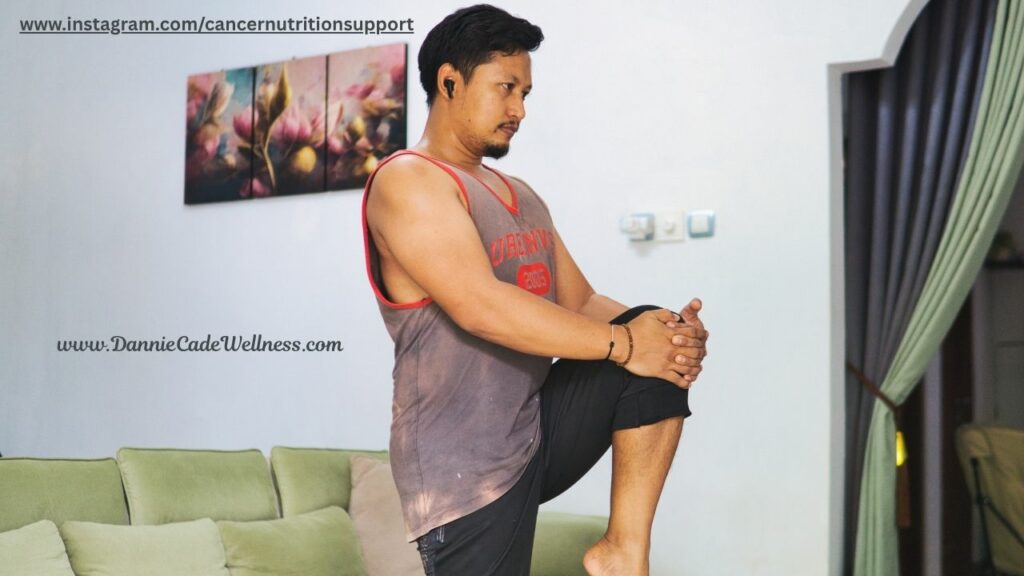
The mental benefits are equally profound. Fatigue and stress create a cycle of inactivity and isolation. Movement, even for just five or ten minutes, releases endorphins (natural mood lifters) and improves mental clarity. It reinforces a sense of control and achievement, both of which are critical when much of your life feels dictated by treatment schedules and side effects. Here are some practical strategies for integrating movement into cancer care:

1. Start small: You do not need to run a marathon or lift heavy weights. Gentle walks around the house, short stretches in bed, or slow chair exercises are sufficient to activate your muscles and improve circulation. Even two to five minutes at a time, multiple times a day, makes a difference.

2. Focus on consistency: Regular, small bouts of movement are more beneficial than occasional intense sessions. Your body responds to cumulative effort. Walking after breakfast, stretching mid-morning, and doing light yoga before bed can create a sustainable routine.

3. Listen to your body: Fatigue is real and should not be ignored. Pay attention to signals like dizziness, shortness of breath, or pain. Movement should be gentle and supportive, never exhausting. On tougher days, prioritize seated stretches, gentle breathing exercises, or simply moving your arms and legs in bed. Every bit counts.

4. Strength and flexibility: Maintaining muscle strength is crucial for overall function. Light resistance exercises using bands, soup cans, water bottles, or your own body weight help preserve muscle mass. Stretching routines maintain flexibility and prevent stiffness, which can improve posture, circulation, and mobility.

5. Incorporate movement into daily life: Movement doesn’t have to be formal exercise. Standing while talking on the phone, taking short walks outside, or performing household tasks gently can all count. The goal is to stay engaged physically in ways that feel achievable.

6. Mind-body integration: Practices like yoga, tai chi, or gentle Pilates combine movement with mindfulness, improving flexibility, balance, and emotional well-being. These exercises calm the nervous system, enhance digestion, and reduce stress. It’s linking physical movement with mental recovery.

It’s also important to track your progress and celebrate small wins. Today’s two-minute walk may seem insignificant, but over time, these moments accumulate. They improve stamina, boost confidence, and reinforce the idea that you are actively participating in your recovery. Movement is both physical and symbolic, every step is a step toward reclaiming control of your body.
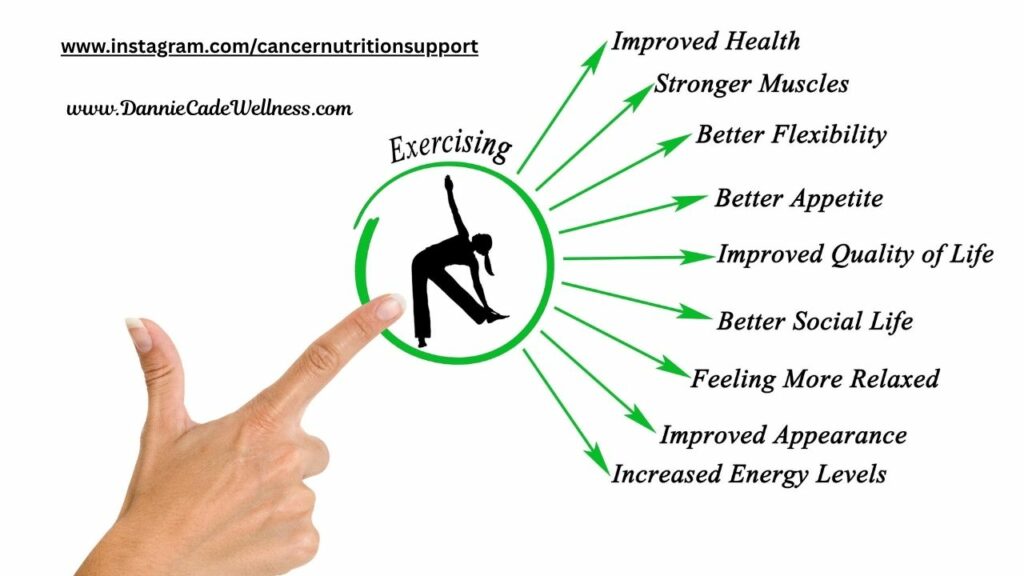
Movement can also support other aspects of recovery. It stimulates appetite, which is critical for maintaining nutrition. It reduces bloating and improves digestion, helping your body absorb nutrients more efficiently. And it supports sleep, which enhances tissue repair and reduces fatigue. In other words, movement magnifies the benefits of nutrition, hydration, and emotional support.

For patients dealing with severe fatigue or other limitations, sippable nutrition or short, guided mobility sessions can be paired together. Even sitting and gently moving arms, legs, or torso while sipping a nutrient-rich smoothie is a form of therapeutic movement that combines nutrition with circulation. These small, integrated actions remind your body that it is supported and that recovery is active, not passive.
Finally, mindset matters. Movement should not feel like punishment or obligation; it is an act of care, an investment in strength, resilience, and emotional well-being. By reframing movement as healing rather than exercise, you remove the pressure and allow your body to respond naturally.
In the next episode, we’ll explore hydration and its critical role in cancer recovery. While often overlooked, staying hydrated impacts every system in the body, from digestion and nutrient absorption to circulation, detoxification, and mental clarity. Proper hydration, paired with movement and nutrition, creates a powerful foundation for healing.

Remember: your body is capable of remarkable recovery. Even small, gentle movements done consistently improve your strength, energy, and sense of control. Every stretch, walk, or simple mobility exercise is a statement that you are an active participant in your healing journey, and that is a powerful position to hold during treatment.
Follow me @ https://www.instagram.com/cancernutritionsupport where I share helpful tips every day, and for making it to the end here’s a free membership to my online wellness center, grab it while there’s still spots available: https://www.danniecadewellness.com