Taking Back Control During Cancer with Lifestyle Shifts
Category: Appetite Loss Solutions
Cancer and it’s treatments is overwhelming, no doubt about that with all of the appointments, transportation, medications, lab work, and scans that fill our calendar. Over time our body feels foreign, tired, and sometimes uncooperative, and while medical care targets the disease itself, there’s a lot you can control on your own – like the ways you care for your body and mind every day.

Today we’re going to look at lifestyle changes that might seem small in the grand scheme of treatment, but they are surprisingly powerful. What we do on our own can help build strength, reduce side effects, and support our immune system. It also gives back a sense of agency, which is often the most healing part of all.

The first area to focus on is nutrition, which we covered in the last episode, but nutrition alone isn’t enough. Think of your body as a complex ecosystem: sleep, hydration, stress management, movement, and emotional health all interact with nutrition to create a foundation for recovery. Missing one piece can undermine the others.

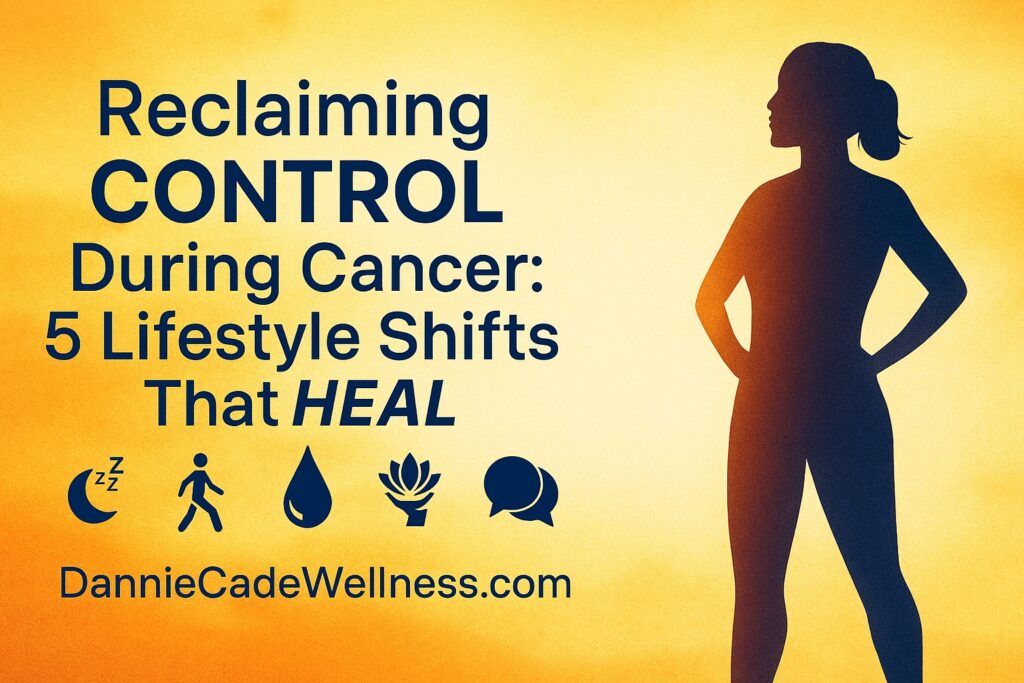
1. Sleep: Rest is not optional; it’s essential. Deep sleep is when the body repairs tissue, balances hormones, and strengthens immunity. Fatigue is a constant challenge during cancer treatment, so creating a sleep-friendly environment matters. Keep your bedroom cool and dark, maintain a regular bedtime, and limit screen time before sleep. Short naps during the day are okay, but try to avoid disrupting nighttime rest.

2. Stress reduction: Emotional stress is not just mental; it affects your body on a cellular level. Stress hormones like cortisol suppress immunity, increase inflammation, and can even interfere with digestion. Managing stress doesn’t mean ignoring fear or anxiety.
It means giving your nervous system space to calm down. Simple techniques like deep breathing, mindfulness exercises, meditation, or grounding walks in nature can help. Even five minutes of focused breathing before a meal can improve digestion and nutrient absorption.

3. Movement: While your body may feel weak, gentle movement is critical. Muscle wasting and circulation problems can worsen without activity, but in saying this, movement doesn’t mean it has to be exhausting workouts, it’s more about consistency.
Chair-based stretches, gentle yoga, Tai-Chi, short walks, or light resistance exercises can maintain strength, flexibility, and mood. Start small: a few minutes at a time, multiple times a day. The goal is to move consistently, not to push past limits.

4. Hydration: Water supports every bodily function, from circulation to digestion to detoxification. During treatment, you might experience nausea, vomiting, or diarrhea, all of which increase the risk of dehydration. Sipping water, herbal teas, or electrolyte solutions throughout the day keeps your body functioning optimally. Avoid relying on sugary beverages or caffeinated drinks that can dehydrate you further.

5. Emotional support: Recovery is more than physical. Many patients feel guilt, fear, or even isolation. Talking with a counselor, joining a support group, or even confiding in a trusted friend or family member can be a lifeline. Emotional support has a direct influence on recovery: it lowers stress hormones, improves appetite, and strengthens motivation to maintain healthy habits.

6. Small wins: One of the most empowering aspects of lifestyle changes is that they can be scaled to your current energy level. If today you can only take a five-minute walk, that’s enough. If you can sip a nutrient-rich smoothie, celebrate it. Healing is not linear, and consistency is more important than perfection. These small victories add up, gradually building resilience and confidence.

When these elements: sleep, stress management, movement, hydration, and emotional support – are layered with proper nutrition, they create a robust foundation for recovery. Your body responds better to treatment, your energy stabilizes, and you feel more like yourself again. It’s also important to remember that you don’t have to do everything at once. Choose one or two areas to focus on each week. Maybe this week, your priority is adding a short daily walk and improving hydration. Next week, focus on sleep routines or deep breathing exercises.

Gradually, these changes become habits that feel manageable, not burdensome. Another critical mindset shift: these lifestyle changes are not just about “doing everything right.” They are about empowering yourself. When you have cancer, so much is out of your control. These steps remind you that you can take action. They help you reclaim authority over your body and your day. You are no longer a passive recipient of treatment, you’re an active participant in your healing.

Finally, recognize that every body responds differently. What works for one person may be different for another as there is no one-size-fits-all solution. Listen to your body, track your progress, and don’t be afraid to experiment gently. Over time, you will discover which strategies support your energy, digestion, and emotional well-being best.

Lifestyle shifts may seem small or simple compared to medical treatments, but they are a powerful complement to our over-all care. They address the whole person – mind, body, and spirit – and that’s exactly what recovery requires. In the next blog, I’ll explore supplements and safe add-ons with you that support your nutrition and recovery, giving your body the additional tools it needs to repair, reduce inflammation, and maintain strength during treatment.

Remember, every small action counts. You’re actively participating in your recovery with every sip, every step, and every breath. You have more control than you might think, and reclaiming it is a profound act of healing. Need more support? Follow me here: https://www.instagram.com/cancernutritionsupport/ where I share what all worked for me during my cancer journey.